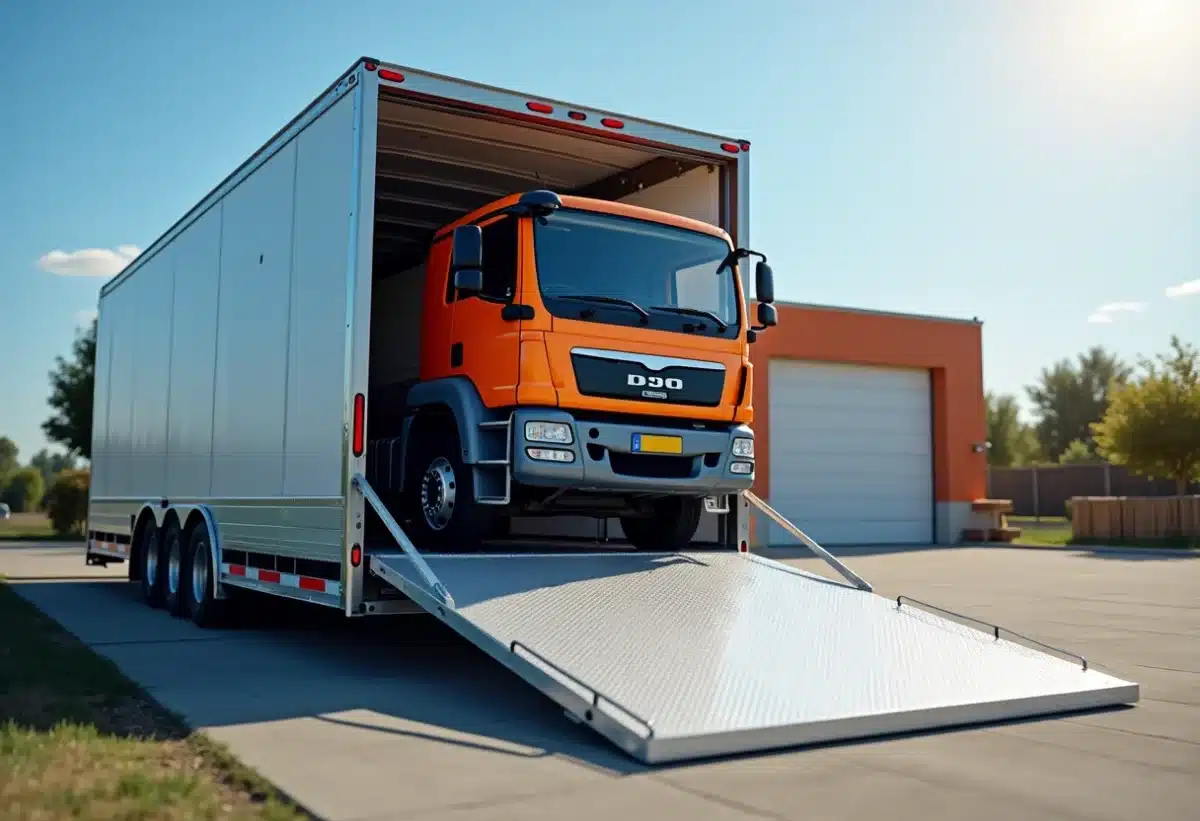
When it comes to loading and unloading a trailer, the right ramp makes all the difference. Whether for heavy equipment, vehicles, or various goods, a well-chosen ramp ensures safety and efficiency.
Several factors come into play: load capacity, material, length, and width of the ramp. An aluminum ramp, for example, offers great strength while remaining lightweight.
Don’t overlook the fastening systems and compatibility with your trailer. A poorly fitted ramp can lead to accidents or significant material damage.
Essential criteria for choosing a loading ramp
Consider the load capacity. Before making a purchase, take into account the maximum weight the ramp must support. A Brico Dépôt loading ramp, for example, often specifies this information. Ensure that the load capacity meets your needs to avoid any risk of deformation or breakage.
Choose the right material. Loading ramps can be made of steel or aluminum. Steel, robust and durable, is ideal for heavy loads. Aluminum, being lighter, offers good strength and is often preferred for its maneuverability.
Surface and safety. Opt for a ramp with a non-slip surface. This reduces the risk of slipping, especially in wet conditions. Edges also play a fundamental role in preventing equipment from deviating during ascent or descent.
Dimensions and loading angle
- Height to overcome: the height between the ground and the level to be reached determines the length of the ramp needed.
- Loading angle: for safety reasons, the angle should not exceed 16.5°, which corresponds to a gradient of 30%.
- Width of the ramp: it should match the wheelbase or tracks of the equipment to be loaded.
Versatility and practicality. Some ramps are foldable, making them easy to transport and store. This feature can be very useful for professionals requiring mobile equipment adaptable to various situations.
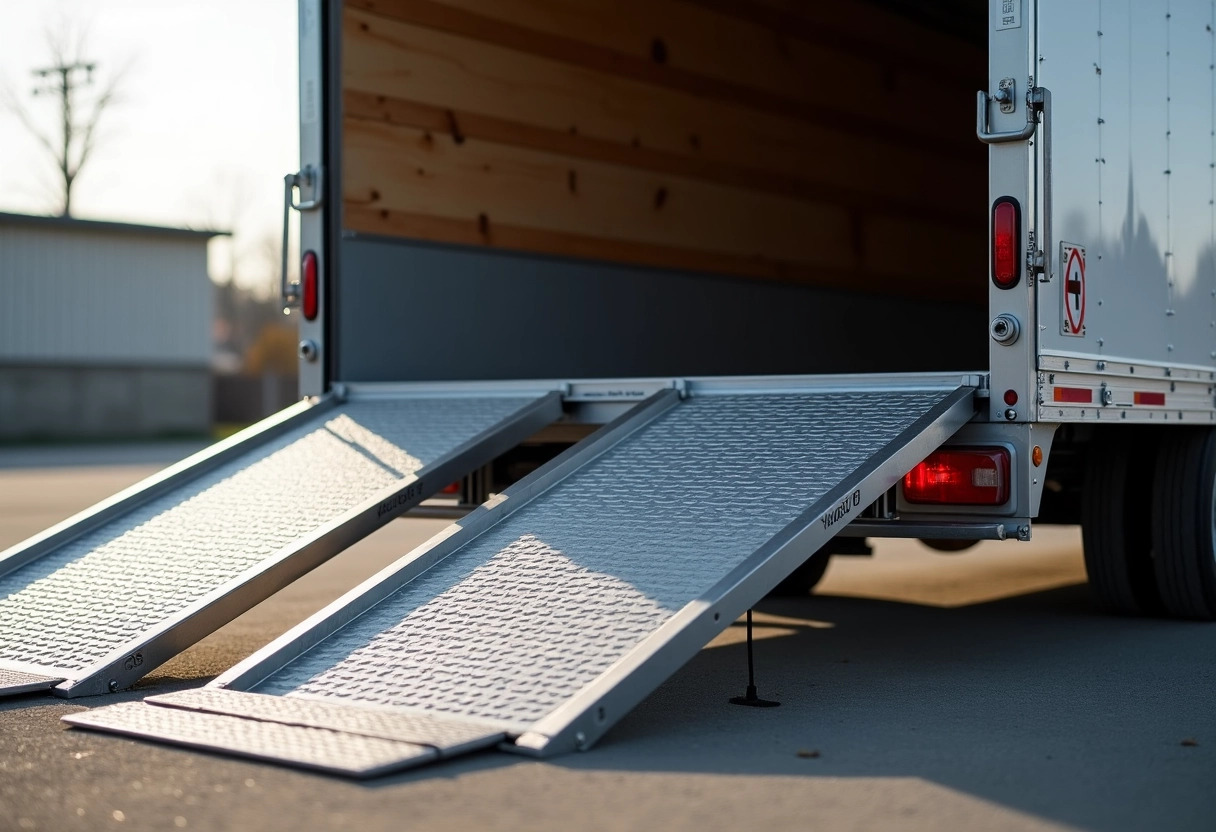
The different types of loading ramps and their uses
Aluminum ramps. Lightweight and easy to transport, these ramps are ideal for home use or small jobs. Used for loading motorcycles, quads, or wheelchairs, they offer excellent maneuverability. Their non-slip surface ensures user safety.
Steel ramps. More robust, they are suitable for industrial environments and construction sites. Capable of supporting heavier loads, they are suitable for transporting small construction equipment, such as tillers or lawn tractors. Their durability makes them a preferred choice for intensive use.
Specific ramps and particular uses
- Foldable ramps: practical and compact, they are ideal for professionals who move frequently. They can be easily stored in a trailer or utility vehicle.
- Wheelchair ramps: designed to help disabled individuals overcome everyday obstacles, such as steps or thresholds. Their non-slip surface and gentle incline ensure safe use.
Versatility of loading ramps. Each type of ramp meets specific needs. Whether in logistics, industry, or for home use, choosing the right ramp for your activity ensures efficient and safe work. The loading ramp allows for moving equipment or machinery from the ground to an elevated level, thereby facilitating employees’ work while saving fatigue and time.