
The dynastic succession of the kings of France is not limited to a straight line from father to son. Agnatic breaks, branch extinctions, and legitimacy disputes create a tree whose reading requires mastering the succession rules specific to each ruling house.
Salic Law and the Principle of Agnaticity: The Legal Foundation of the Dynastic Tree
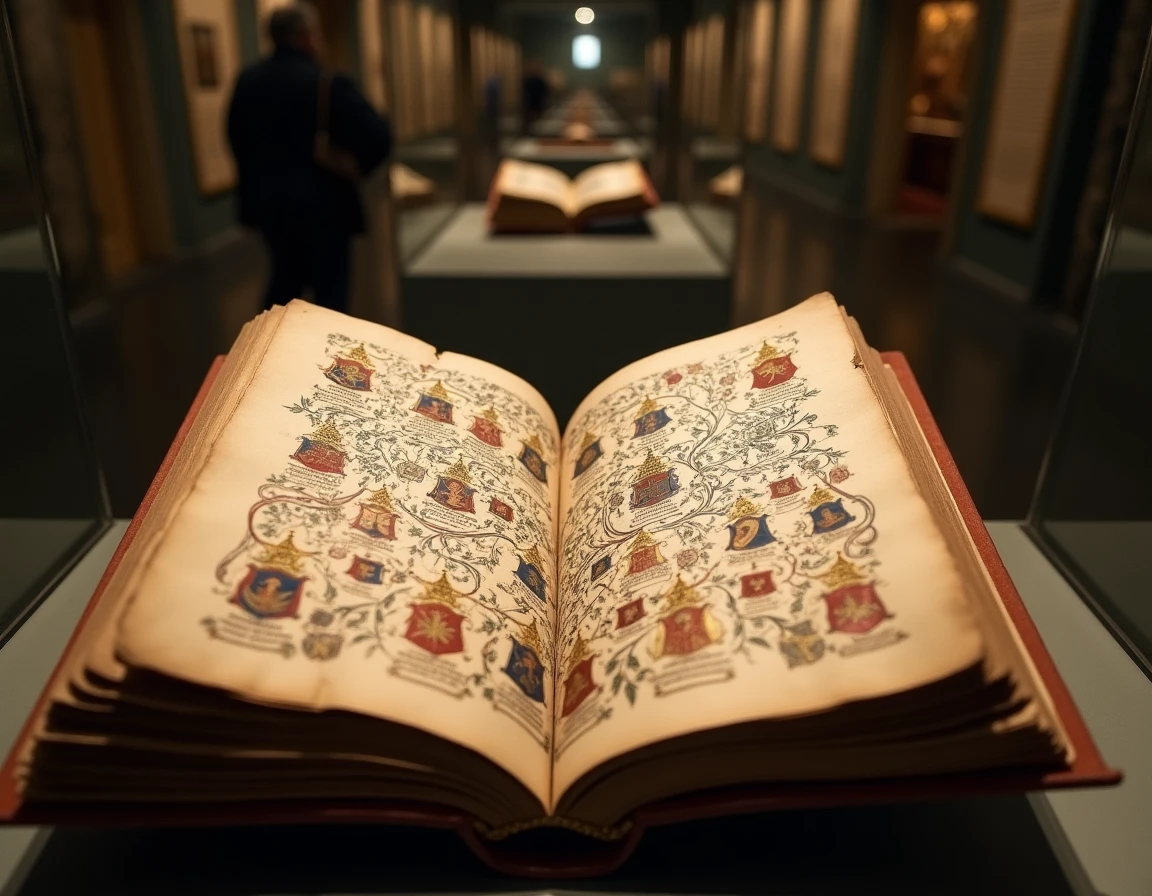
The Salic law, as it was reinterpreted from the 14th century onwards, excludes women from the succession to the throne and prohibits transmission through women. This principle of strict agnaticity radically distinguishes the family tree of the kings of France from that of neighboring monarchies. In England, the crown passes to women; in Castile as well, under certain conditions.
This rule explains why the daughters of kings do not appear on most dynastic trees. They have no direct succession claim. Their role is limited to forging marital alliances, sometimes crucial for foreign policy, but invisible in the agnatic logic.
When we study the family tree of the kings of France, we find that each branch change corresponds to a male extinction. The Valois succeed the direct Capetians in 1328 because Charles IV dies without a son. The Bourbons arrive in 1589 after the assassination of Henry III, the last Valois, without a direct male heir.
The eldest son inherits first. If not, it is the second son, then the third. In the total absence of male descendants, one goes up to the nearest agnatic collateral. This mechanism produces sometimes spectacular jumps between branches on the tree.
Franco-English Ramifications: Plantagenet, Eleanor, and the Double Crown

National genealogical trees provide a truncated view. The French and English dynasties share common ancestors over several centuries, and this intertwining reshapes the understanding of both monarchies.
The case of Eleanor of Aquitaine is the most telling. Wife of Louis VII, then of Henry II Plantagenet, she shifts a third of French territory under English suzerainty. Her descendants reign simultaneously over England and considerable French fiefs. The Plantagenets even claim the crown of France during the Hundred Years’ War, based on direct dynastic ties.
The work of Françoise Surcouf, published by Éditions Ouest-France, emphasizes these Franco-English dynastic interpenetrations. This “bi-monarchical” approach shows that key marriages between Plantagenet, Anjou, and Valois simultaneously reconfigure the trees of both monarchies. Here we observe an angle that classic posters and educational diagrams almost systematically ignore.
Strategic Marriages and Territorial Reconfiguration
Each marital alliance modifies the political map as much as the dynastic tree. The marriage of Anne of Brittany to Charles VIII, then Louis XII, attaches the Duchy of Brittany to the crown. That of Catherine de Medici to Henry II introduces Florentine influence at court.
A family tree of the kings of France without foreign alliances remains a skeleton without flesh. The international ramifications explain wars, treaties, and territorial claims far better than a simple list of successions.
Genetics and Dynastic Controversies: What Science Brings to Royal Genealogy
Recent DNA analyses have reignited debates that historians thought were settled. Studies published in specialized journals and picked up by historical press in 2023 question the actual biological filiation of certain sovereigns, beyond the recognized legal filiation.
Genetics introduces doubt where dynastic law ruled without appeal. Classic trees, centered on the Capetians, Valois, and Bourbons, generally stop at known successions up to 1830, sometimes including current claimants. They do not incorporate these scientific controversies.
This intersection of history, dynastic law, and genetics opens a field we qualify as “relational genealogy” of royalty. The idea is to no longer consider the tree as a fixed document, but as an evolving object, subject to corrections as analytical tools progress.
Methodological Limits of DNA Analyses
Working with royal remains poses specific problems:
- The authentication of relics is rarely certain, as several burials have been disturbed during the Revolution or during subsequent transfers
- The contamination of samples from successive manipulations over several centuries reduces the reliability of results
- Genetic results do not challenge the legal legitimacy of successions, which relied on public recognition and coronation, not on biological proof
We recommend considering these genetic data as a complement, not as a substitute for traditional historical documentation.
Reading Family Trees: Visual Codes and Interpretation Traps
A family tree of the kings of France is read differently depending on the time of its creation and its purpose. Medieval trees prioritize the direct lineage and deliberately omit collateral branches. Modern trees attempt comprehensiveness, at the risk of becoming unreadable.
Graphical conventions vary from document to document and can mislead an unwary reader. Here are the distinctions to know:
- Solid lines generally indicate recognized biological filiation, while dotted lines indicate contested filiation or regency
- The horizontal position of a character does not always mean contemporaneity: it may indicate a collateral link
- Colors, when they exist, distinguish ruling houses (direct Capetians, Valois, Bourbons), but the codes are not standardized
- The absence of a character does not mean their historical non-existence, but often their exclusion from the direct line of succession
Commercial posters and educational sheets simplify these codes to the point of erasing ambiguities. A linear tree from Clovis to Louis-Philippe gives the illusion of perfect continuity, while each branch change represents a major political crisis.
French royal genealogy remains a field where simplification hinders understanding. Dynastic breaks, international alliances, and recent contributions from genetics produce a tree far more complex and richer than common representations suggest.