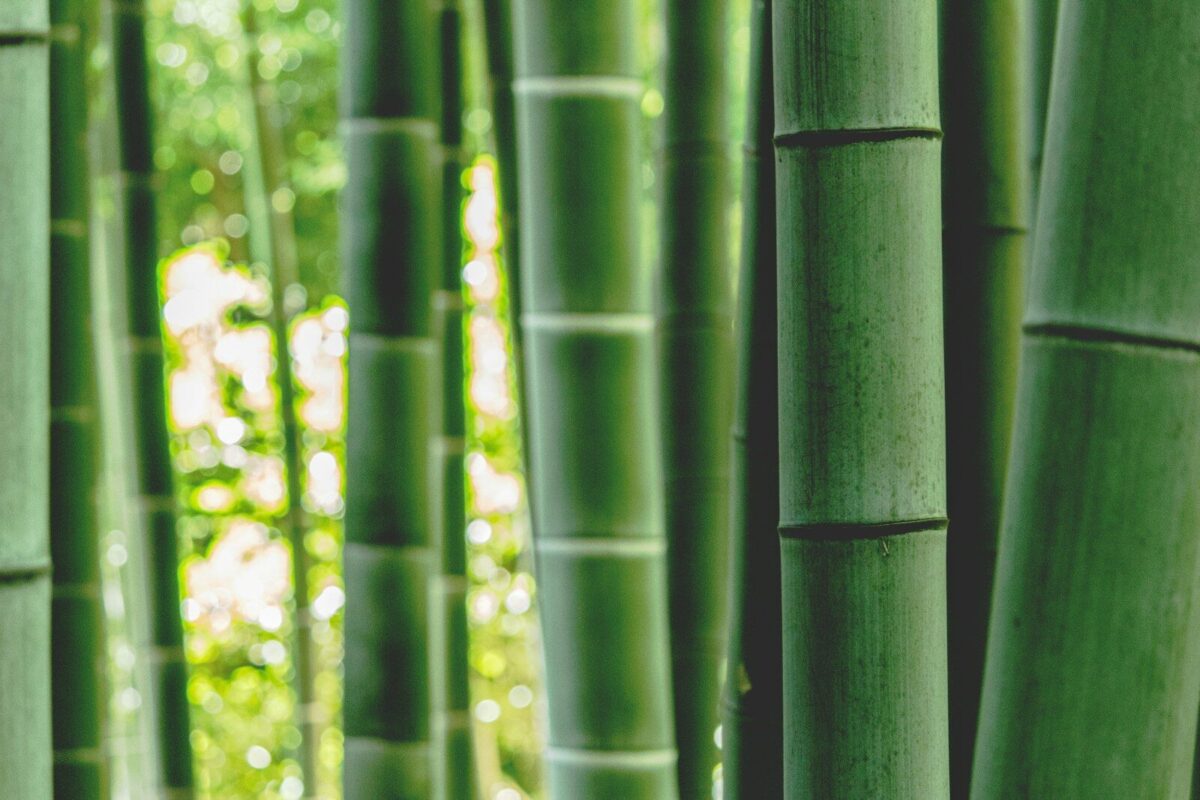
Bamboo torture is one of those tortures whose notoriety relies more on narrative than on evidence. Widely disseminated in Western popular culture since the mid-20th century, this method attributed to several East and South Asian countries poses a major historiographical problem: no reliable primary source attests to its systematic use.
Plant Physiology of Bamboo and Actual Perforation Capacity
Bamboo (subfamily Bambusoideae) exhibits one of the fastest growth rates in the plant kingdom. Some species, notably Phyllostachys edulis, can reach several centimeters in height per hour during active growth. This speed fuels the myth of a culm capable of piercing a human body.
Research in plant physiology conducted by the Royal Botanic Gardens, Kew, nuances this reading. The young culm remains relatively flexible for a significant part of its initial growth. Its tip, while firm, does not possess the rigidity of a metallic piercing object. The pressure exerted by the shoot increases gradually, but the direct perforation capacity of living tissues remains unproven under controlled conditions.
In 2008, the show MythBusters staged a television experiment in which bamboo shoots penetrated a substitute for organic tissue within a few days. This demonstration, often cited as validation, involved a synthetic material mimicking the density of flesh, not living human tissue. The distinction is significant: a living organism heals, becomes infected, and reacts with inflammation, all parameters absent from the television protocol.
To delve deeper into the history of bamboo torture, one must intersect botany, biomechanics, and historical archives, an exercise rarely conducted with rigor.
Bamboo Torture: A Colonial Myth More Than a Documented Practice
We observe that nearly all accounts describing bamboo torture come from Western sources. Historians of colonial violence have identified a recurring pattern: these descriptions appear in popular books and magazines from the 19th and early 20th centuries, often without citation of Asian sources.
Paul Beattie, in the Journal of Colonialism and Colonial History (spring 2021), links these accounts to sensationalist literature intended to justify or illustrate the supposed barbarism of colonized peoples. Bamboo torture is more a product of colonial fantasy than of local judicial documentation.
The Absence of Evidence in Military Archives
The fact-checking site Snopes published an article in 2023 dedicated to the specific question of Japanese use during World War II. The conclusion is clear: no military archive consulted provides evidence of actual and systematic use of this method by the Imperial Japanese Army.
Testimonies from Allied prisoners of war mention numerous forms of documented mistreatment (deprivation, forced labor, direct violence). Bamboo torture does not appear as a practice attested by identifiable direct witnesses. Its emergence in popular culture coincides with the cinematic and literary production of the 1950s, a period when captivity narratives in Asia fueled a flourishing editorial genre.
Supposed Mechanism of Bamboo Torture and Regional Variants
The technical principle described in narrative sources follows a constant pattern:
- The victim is immobilized horizontally above a young bamboo shoot previously sharpened, with the body tied to a fixed frame preventing any movement
- The natural growth of the shoot exerts continuous pressure on the body, theoretically causing slow perforation over several hours or days
- Some versions add regular watering of the shoot to accelerate growth, or even positioning above several simultaneous stems
Regional variants attributed to China, India, or Sri Lanka differ in staging details but share the same narrative core. None of these variants rely on a local administrative or judicial document. We consistently find an indirect transmission chain: a European traveler reports the testimony of an intermediary who supposedly heard about the practice.
The Case of Feudal Japan
The attribution to feudal Japan is particularly widespread. Accounts mention use by local lords (daimyos) as punishment for treason. Specialists in Japanese penal history, when addressing this topic, emphasize that the torture and execution methods documented in Edo-period judicial archives are numerous and well-documented (crucifixion, scalding, sawing). Bamboo torture does not appear in these records.
Why the Bamboo Torture Myth Persists
The persistence of this narrative can be explained by several converging factors:
- The rapid growth of bamboo is a real and verifiable botanical fact, which lends the narrative an appearance of scientific plausibility
- The torture evokes a visceral fear – that of a slow and inexorable penetration of the body by a plant element – making it memorable and transmissible
- 19th-century Orientalism produced a catalog of exotic tortures intended to mark the radical otherness of Asian societies, in which bamboo occupies a prominent place
- The MythBusters experiment in 2008 reignited popular interest by giving it an experimental veneer, despite the methodological limitations of the protocol
Bamboo itself remains a plant with remarkable properties: construction material, food source, textile resource. Reducing this giant grass to its role in a torture myth ignores the considerable place it occupies in Asian material cultures.
Bamboo torture serves as a test of critical reading of historical sources. Each element of the narrative seems plausible when taken in isolation, but the whole rests on no firsthand document. This gap between plausibility and evidence makes it a case study for the historiography of violence.