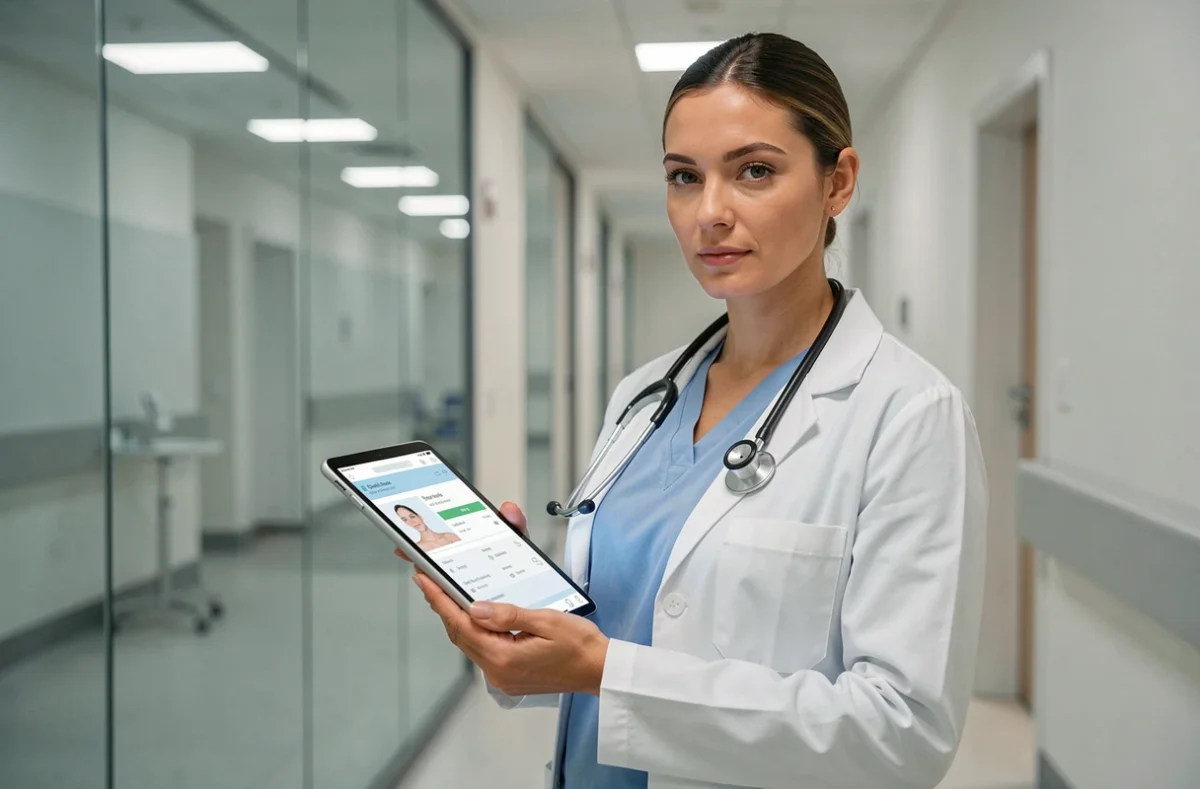
In a local care center, an advanced practice nurse sees a patient in direct consultation, makes a nursing diagnosis, and prescribes a supplementary examination. Just two years ago, this scenario was limited to a few experiments. Since the law of June 27, 2025, it has become part of the French regulatory framework. This concrete change illustrates why the jobs of tomorrow in healthcare open up perspectives that few other sectors can offer today.
New nursing skills: what the 2025 law changes on the ground
The law of June 27, 2025, and its implementing texts have profoundly changed the scope of practice for nurses. We are talking about recognized nursing consultations, nursing diagnosis, and regulated prescription of certain products and examinations according to a regulatory list. For professionals already in position, this represents a direct increase in responsibility, without necessarily having to undertake a complete curriculum.
For those entering the profession, the range of pathways expands right after training. A qualified nurse can now consider practicing in advanced practice with direct access to patients, which radically changes the usual career trajectory.
A detailed overview of the jobs of tomorrow in healthcare on Jean Le Cam lists emerging fields and the skills sought by recruiters in the sector.
Healthcare practice locations: beyond the hospital and private practice
When thinking of healthcare jobs, one spontaneously visualizes a hospital service or a medical office. The reality on the ground is diversifying significantly. Advanced practice nurses can now intervene in maternal and child protection, school health, or child social assistance. These are medical-social and preventive environments that are actively recruiting but remain little visible in traditional orientation guides.
This diversification of practice locations creates opportunities for varied profiles. A caregiver who does not fit into the hospital rhythm can build a career in local structures, in medical-social establishments, or in community prevention. The choice of practice location becomes a real career lever, not just a forced assignment.
Medical-social sectors that are prioritizing recruitment
- Maternal and child protection (PMI): monitoring young children and supporting families, with needs heightened by new nursing responsibilities
- School health: screening, prevention, and orientation of students, a sector in chronic tension for qualified personnel
- Child social assistance: care for vulnerable populations, where care skills intersect with social work
- Local care structures and multi-professional health houses: coordinated practice among doctors, nurses, and other paramedical professionals
Artificial intelligence and digital health: skills to acquire, not to fear
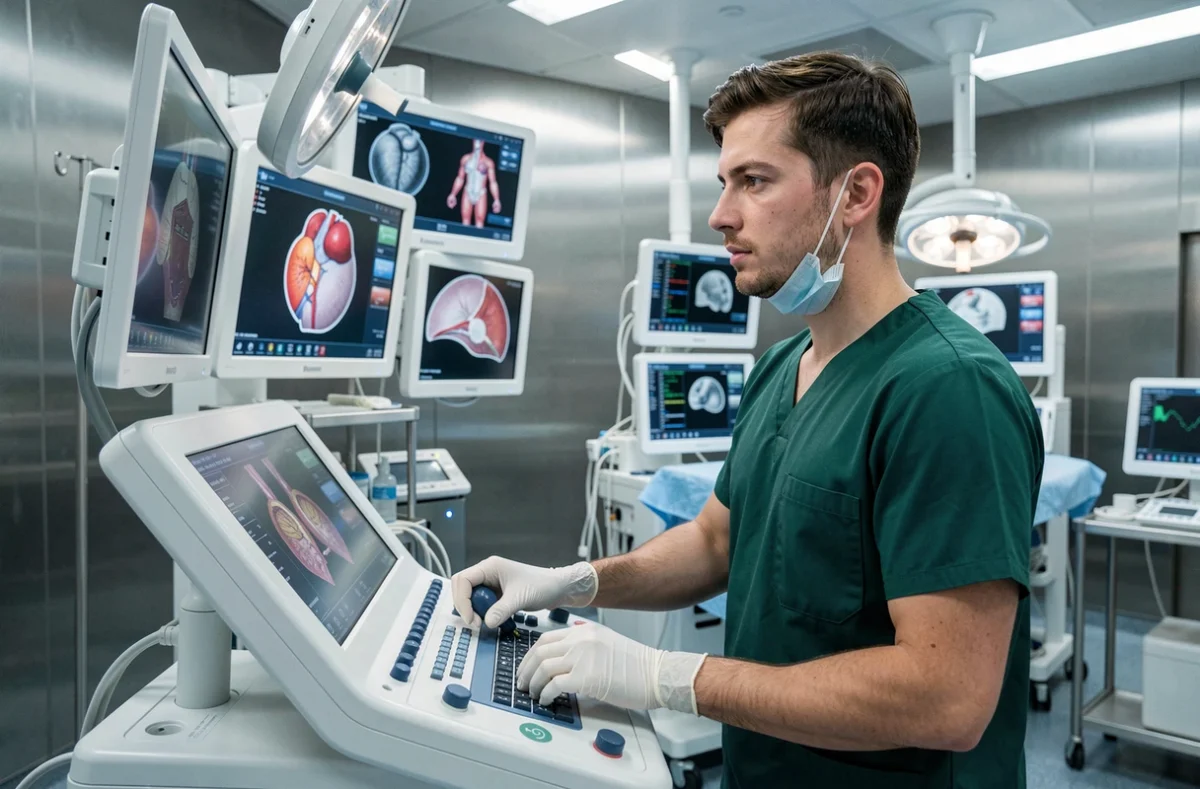
ANAP has identified about thirty new jobs likely to emerge in the coming years, including roles directly related to surgical robotics and telehealth. On the ground, the adoption of these tools largely depends on team training.
A survey published by the National Order of Nurses in September 2025, involving 243 responding elected officials, highlighted a recurring observation: many professionals report lacking training in artificial intelligence. The sample does not represent the entire profession, but it points to a gap between available tools and caregivers’ ability to use them daily.
For individuals at the beginning of their careers or in transition, this gap presents an opportunity window. Training in digital health tools (electronic patient records, teleconsultation, connected devices) provides a concrete hiring advantage. Health and medical-social establishments are looking for professionals capable of combining clinical skills with digital proficiency.
Health training and professional retraining: more accessible pathways
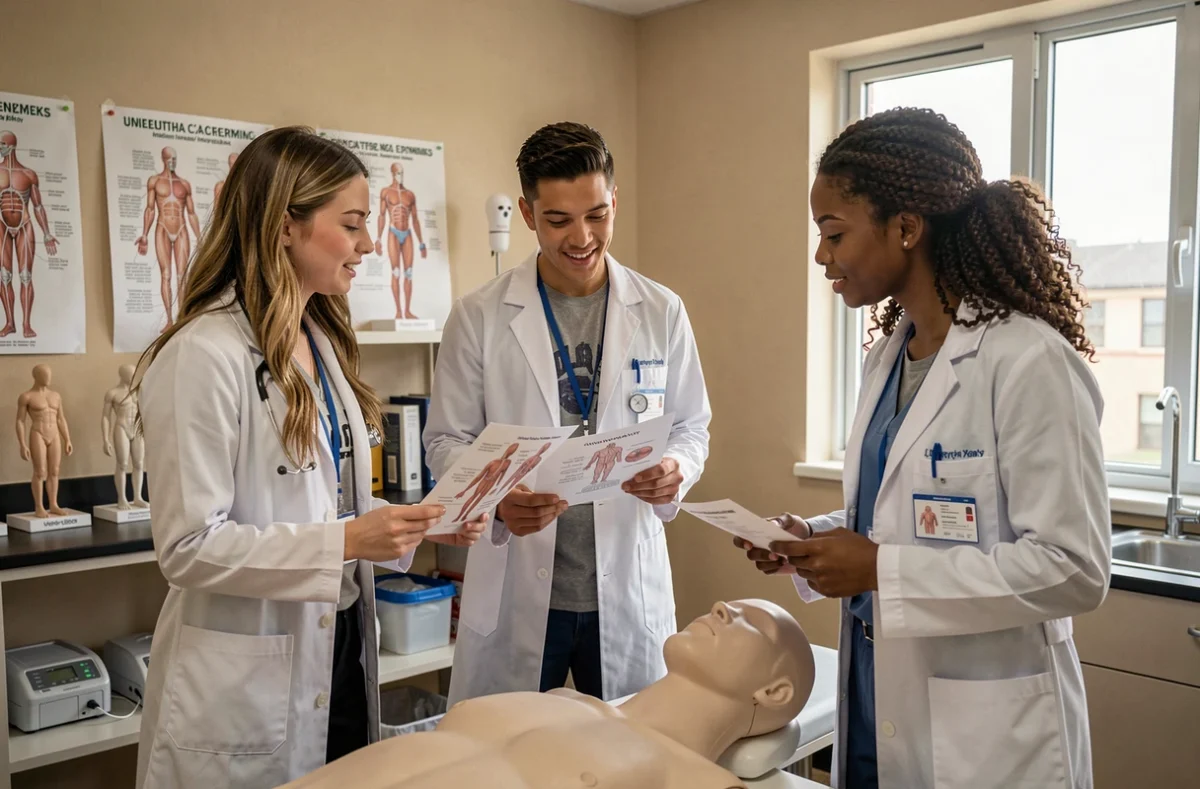
The healthcare sector recruits profiles that do not all come from a long medical curriculum. Some positions, such as nursing assistant or home care aide, provide access to stable employment after short training. The diversity of entry levels makes the sector accessible to very different audiences, from recent graduates to employees in transition.
Work-study training and pathways for validating acquired experience (VAE) allow for combining income and skill enhancement. For a worker leaving a fragile sector, healthcare offers job security that is hard to find elsewhere: the demand for care does not decrease; it increases with the aging population and the evolution of prevention needs.
What distinguishes a healthcare pathway from other promising fields
- Job security: recruitment tensions in the medical and medical-social sector remain strong, protecting against structural unemployment
- Integrated career evolution: pathways between nursing assistant, nurse, advanced practice nurse, with funded continuing education
- Meaning of work: the direct relationship with patients remains the main driving force cited by professionals in practice
The healthcare sector does not just recruit in volume. It is undergoing structural transformation, with new regulatory frameworks, new practice locations, and new tools. For those seeking sustainable employment in a changing field, these jobs are not a default option. They are pathways where skill enhancement produces concrete effects, on the ground and in the lives of patients.